The whole trade,
before the candle closes.
A signal tells you something happened. It does not tell you where to get in, where you are wrong, what you are aiming at, or how many contracts your risk allows — so you end up working all four out in the ninety seconds you do not have.
APOLLO ONE hands you all four at once, on the chart, while there is still time to use them. And when the honest answer is that there is no trade, it says so out loud — before you talk yourself into one.
It is the professional’s process, drawn: the level graded before you get there, the stop under the structure, the size already computed for your account, the ladder laid out. The discipline stops depending on how you feel that morning.
One membership covers every Trader’s Edge indicator, this one included. Cancel whenever you want.

Those are the indicator’s own status labels, not a description of them. The percentage is a readiness display — it is not a probability and it is not a forecast.
Fifty tools is fifty
more decisions.
You can buy fifty overlays tomorrow and you will still be the one deciding at 9:31 — with fifty more things to read, weigh and second-guess while price moves. This is one indicator doing one job: give you a single plan, keep it honest as the tape moves, and take it away the moment it stops being valid. One thing to read instead of fifty.
Your levels, ranked —
not a chart full of lines.
The levels that matter today are not the round numbers, and they are not last week’s drawings. It builds them from where price actually traded and ranks them, so the map in front of you arrives already sorted by what deserves your attention.
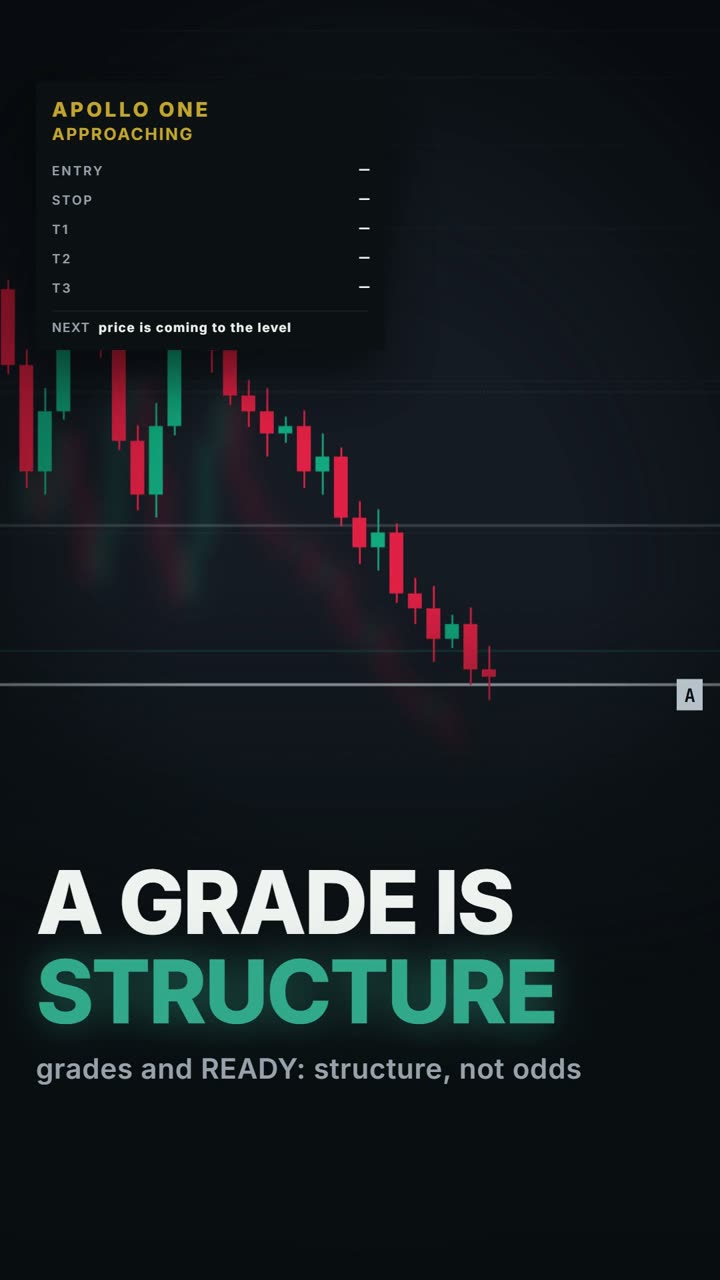
Levels it grades itself
Support and resistance derived from one-minute volume, time spent at price and where price was actually accepted — including the thin stretches where volume never built. Then graded, so the map is ranked instead of cluttered.
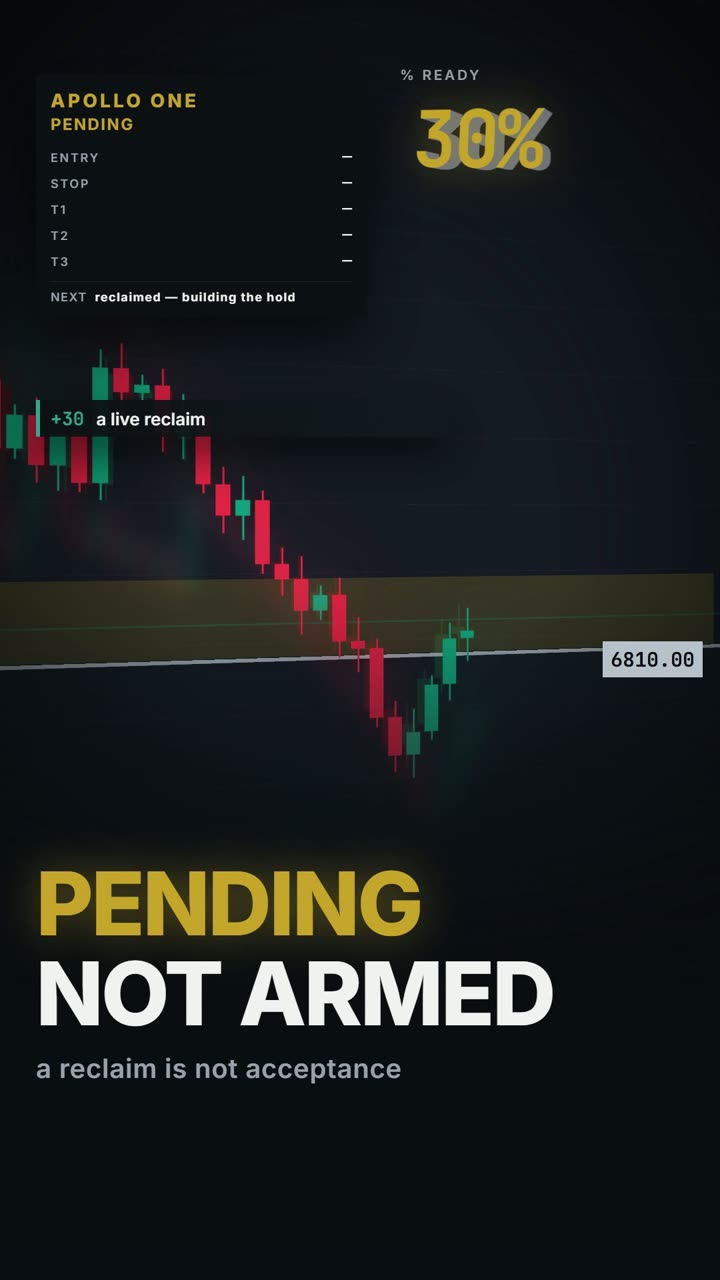
Acceptance, not just a touch
A reclaim is not acceptance. It waits for price to hold above the level instead of buying the first tick back through it, and the card names the condition it is still missing while it waits.
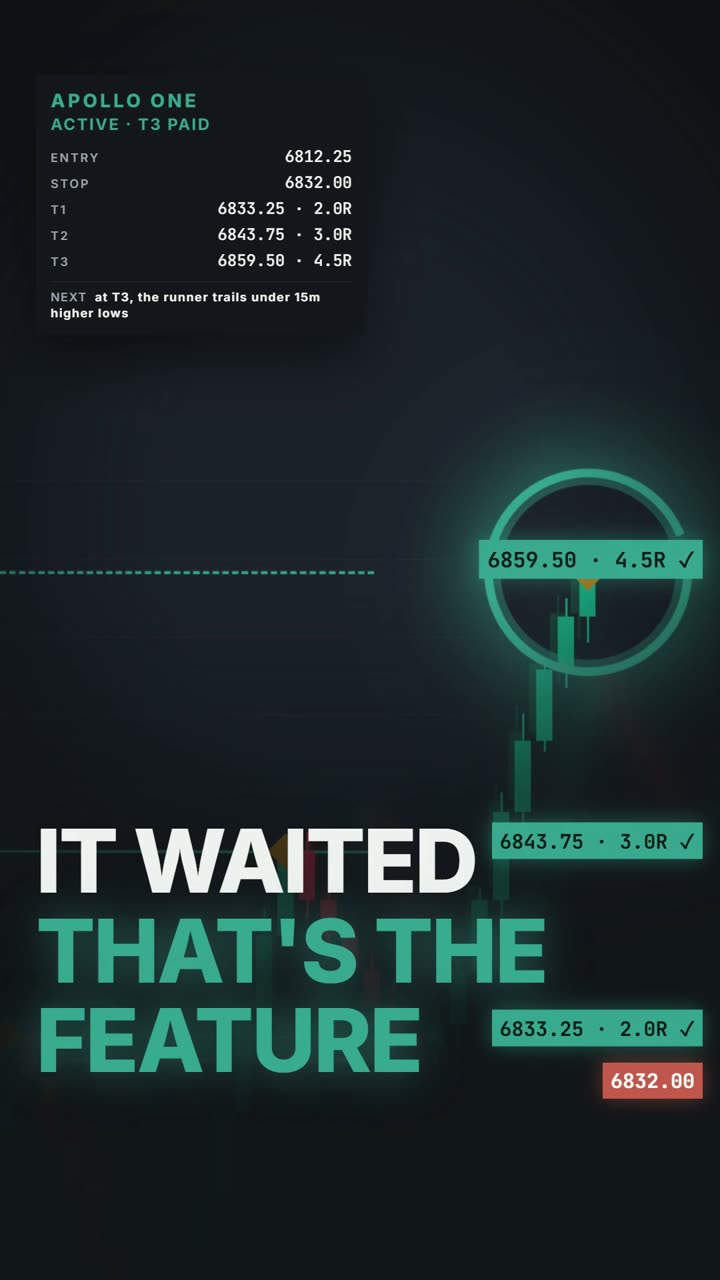
Waiting is the feature
The flush below a level that had been holding, the shorts trapped underneath, and the reclaim that follows. One setup read properly, rather than a dozen read loosely — and a regression channel and structural trendlines for context, never as a trigger.
Four decisions,
already made.
When a setup arms, all four arrive together with the reasoning attached. Nothing is left for you to assemble later, in a hurry, with money already on the line.
- Entry — at the level, below price. The order waits where the trade is actually worth taking. It does not chase price up to meet a signal, and if price never comes back there is simply no fill.
- Stop — under what caused the trade. Structural, not a fixed number of points. If that structure breaks, the reason for the trade is gone, and the card says so rather than widening to survive.
- Targets — at real levels, labelled when they are not. When no graded level sits where a target belongs, the line is drawn dashed and tagged T1 proj, so a projection can never be mistaken for structure.
- Size — from your risk budget, floored. Computed from the risk you set, rounded down and never up, then translated across contract sizes — because a ladder that works on twenty contracts does not work on two.
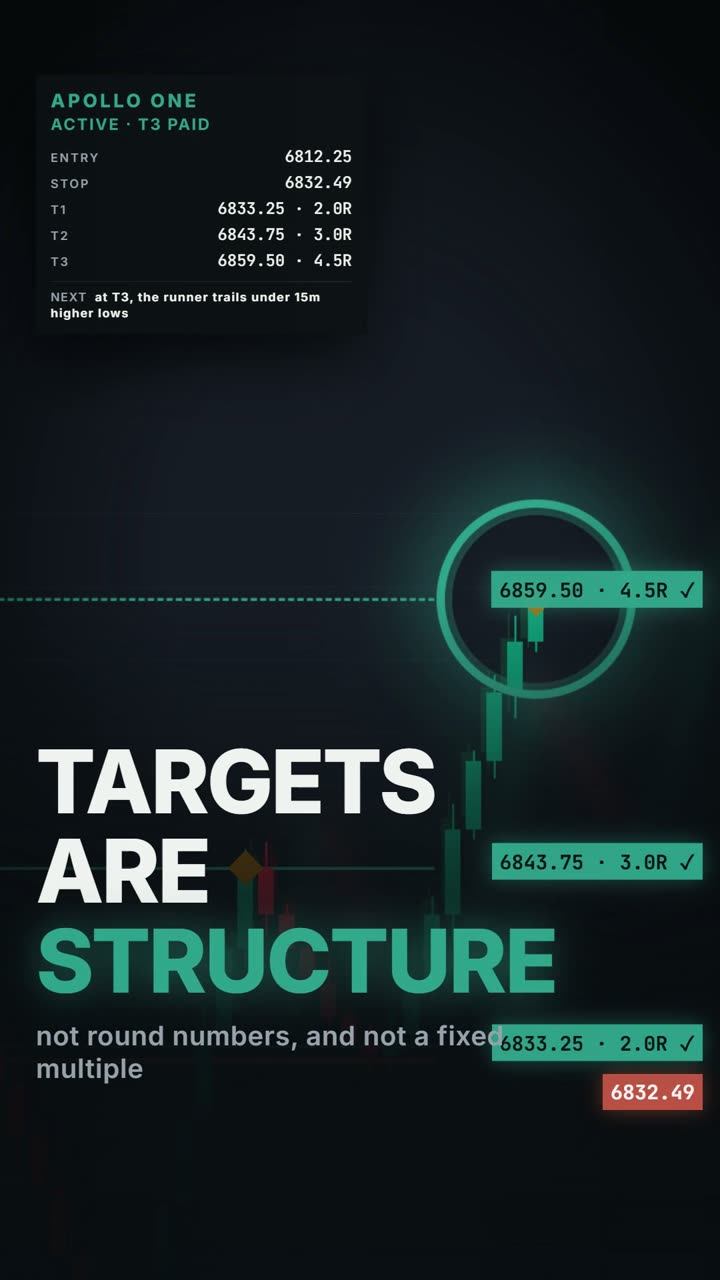

The stop only goes
one way.
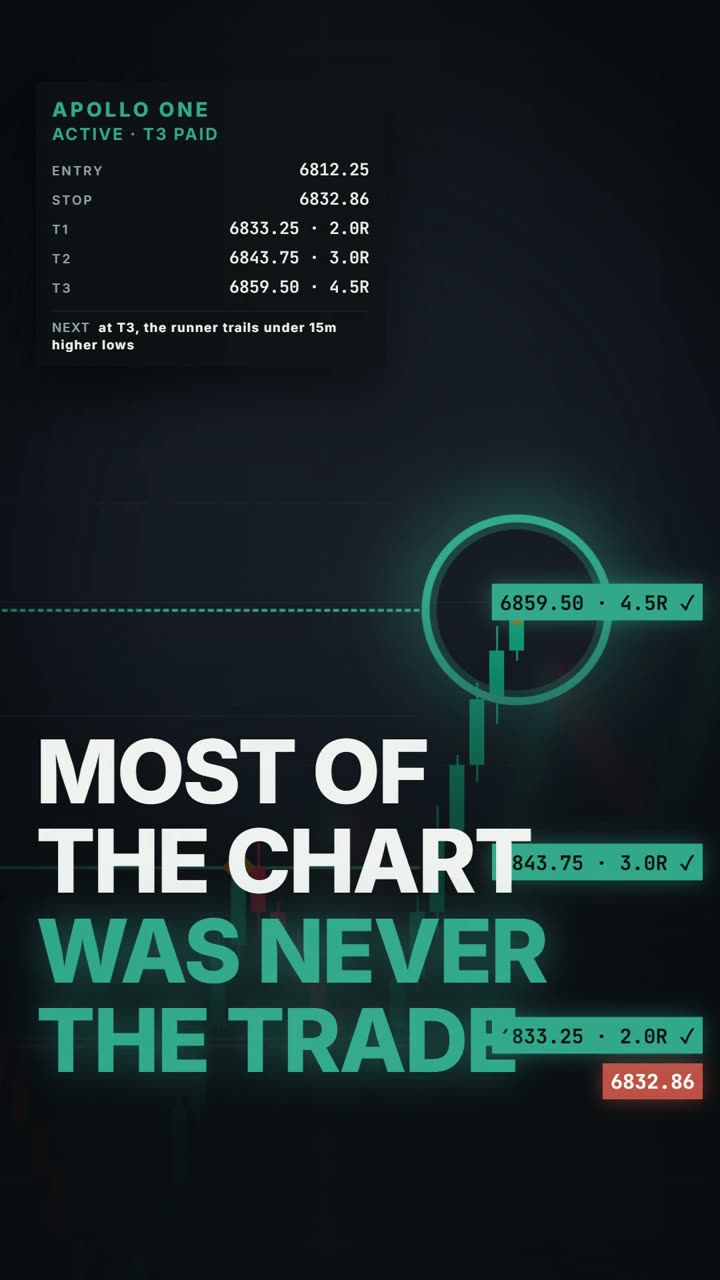
The plan does not end at the entry, and neither does the help. Targets come off in a ladder, the stop moves up behind each one, and it is never walked back down to give a losing trade more room — so the move that turns a small loss into a bad day is not one you can make by accident.
Nothing ratchets on a best-so-far high water mark either — every bar is recomputed from the structure that is actually there, so the plan you are looking at is the current one.
Alerts follow that lifecycle rather than a crossing, so you are told a setup is approaching, then pending with its missing condition named, then armed with the whole plan attached, then as each target is paid. If a setup dies before it arms, that is an alert too. The indicator never places an order.
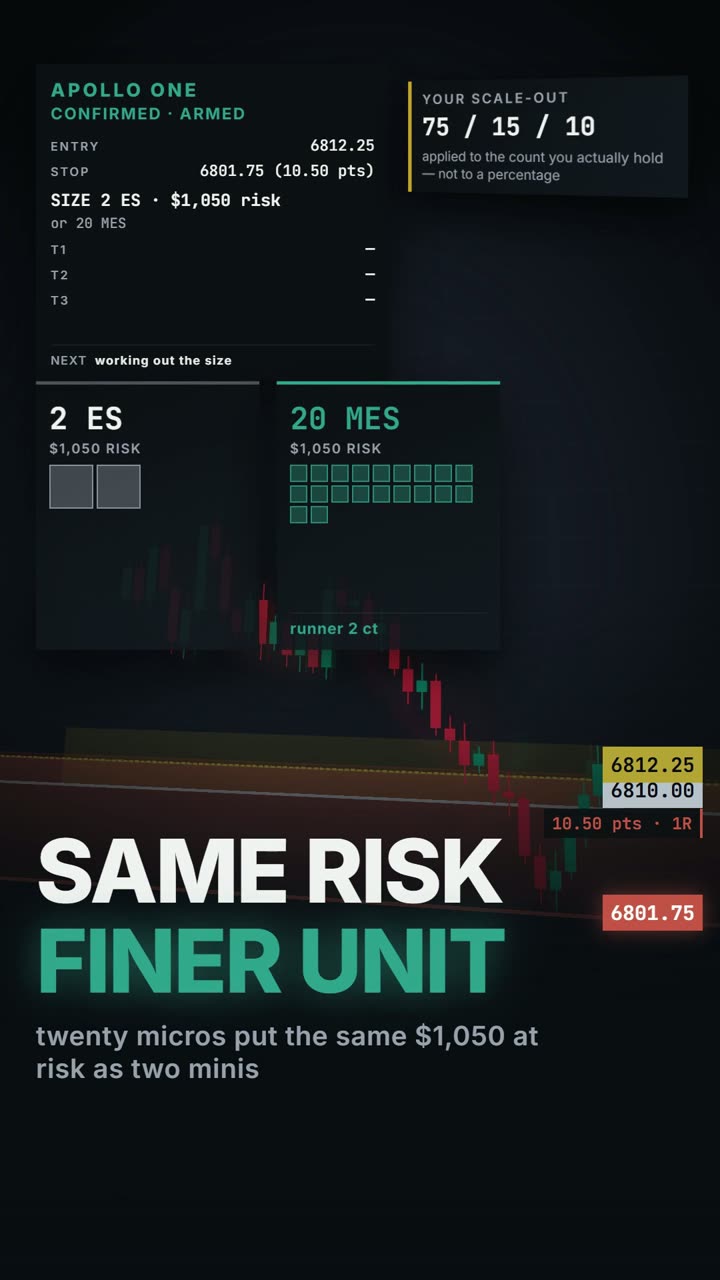
Same risk,
finer unit.
The contract count comes from the risk budget you set, floored rather than rounded up, and it is translated across contract sizes — because the same scale-out that works on twenty micros leaves nothing to run on two minis.
That translation is on the card, in plain language, at the moment the plan arms. You are not left to do the arithmetic in your head while price is moving.
There is no account connection. The maths is done on the risk settings you enter, not on a real balance.
The trades it talks
you out of.
The cheapest trade of your day is the one you did not take. These are the indicator’s own words, exactly as they appear on your chart — a tool that says no, and says why, is worth more than one that always has an answer ready.
price ran past reach: no chase
The move left without you. It will not walk the entry up to catch it.
not tradable for this account
The stop this setup needs is wider than your risk allows, even at one micro. It says
so instead of shrinking the stop to make the trade fit.
T1 proj
No graded level sat where the first target belongs, so this one is a projection —
drawn dashed and labelled, never dressed up as structure.
no runner at 2 ES · 20 MES runs 2
The same scale-out leaves nothing to run on two contracts and two runners on twenty.
Rather than pretend, it tells you what your size actually supports.
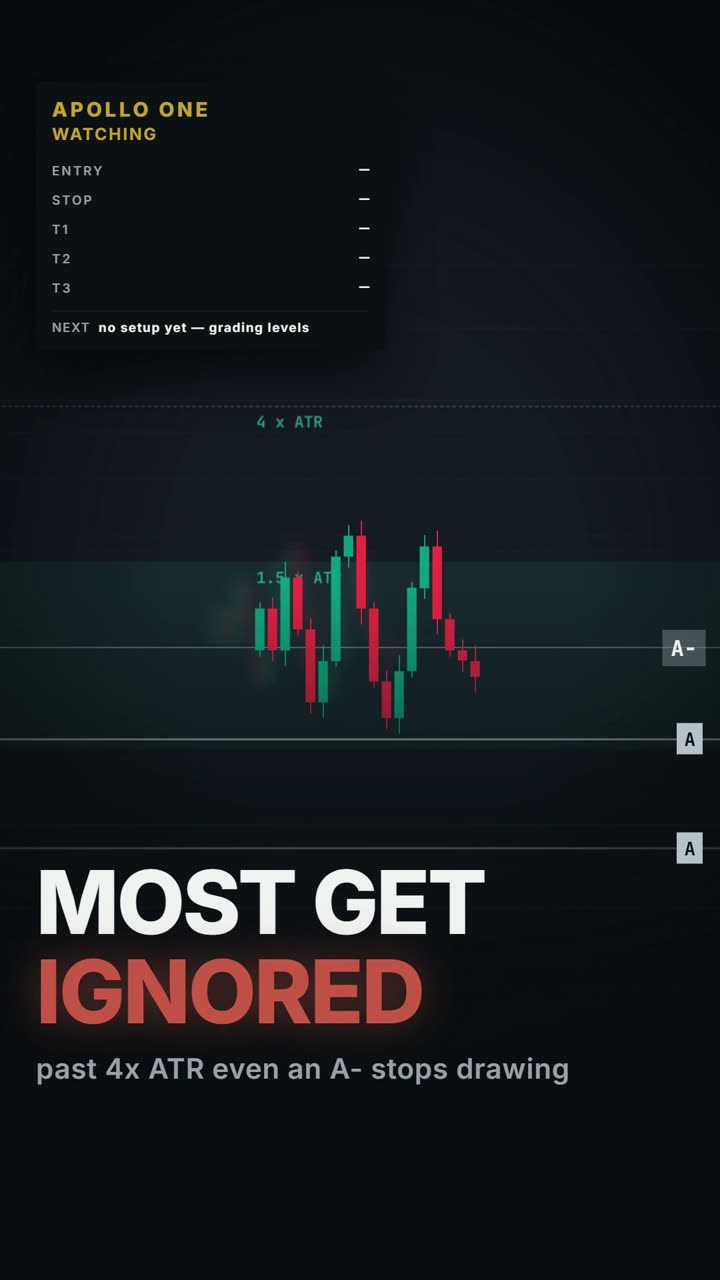
Most candidate setups never arm — including well-graded ones. That is the design, not a gap in coverage.
It does not trade, and
it does not predict.
- Whether you take the trade is always your decision. APOLLO ONE is decision support. It has no broker connection of any kind and places no orders.
- It does not predict. The entry rests at a level and waits. Sometimes price comes back to it and sometimes it never does, and there is no version of this tool that knows which in advance.
- It is long-only by design. A short counterpart is a separate tool and is still in development. Nothing on your chart today is a short signal.
- Sizing is arithmetic on what you tell it. There is no account connection, so the contract count is computed from the risk settings you enter — not from a real balance.
- It reads the chart, and only the chart. News, an economic release, and anything else it has not been shown are yours to weigh.
- No win rate, no P&L and no backtest number appears anywhere on this site. Not because they would be unflattering, but because we will not put a figure in front of you that we have not measured honestly enough to stand behind.
One membership.
Every indicator.
$49.99 a month covers APOLLO ONE and everything else in the catalog as each piece ships. Checkout asks for your TradingView username, because that is how access is granted — it has to match the account you chart on.
Where it stands today, stated plainly: APOLLO ONE is in invite-only testing and nothing else in the catalog has been published yet. Membership opens in step with those releases rather than ahead of them. It is also listed on TradingView, where you can read the whole description before you decide anything.